


If you need a Berks County probate and estate administration lawyer, Sager & Sager provides practical legal guidance for executors, administrators, beneficiaries, and families throughout Pennsylvania.
Attorney Daniel Sager helps clients manage probate matters, comply with Pennsylvania law, and avoid unnecessary delays during estate administration.
How We Help Families in Berks County
We assist clients with:
- Probate administration
- Opening estates
- Executor guidance
- Estate disputes
- Asset distribution
- Creditor claims
- Probate litigation
- Intestate estates (when there is no will)
Our goal is to simplify the probate process and help families move forward with confidence.
Trusted Probate Representation in Berks County, PA
Losing a loved one is difficult. Probate can add stress, confusion, and financial pressure during an already emotional time.
Many people are unfamiliar with probate until they are suddenly responsible for managing an estate.
At Sager & Sager, we help families throughout Berks County understand the process and avoid costly mistakes. We provide clear communication and practical legal guidance at every stage of estate administration.
Probate often involves more than distributing property. Executors may need to:
- Manage real estate
- Gather financial records
- Pay debts and taxes
- Communicate with beneficiaries
- Resolve disputes
- Meet court deadlines
Mistakes during probate can create delays and legal problems for the estate.
Work With an Experienced Berks County Probate Lawyer
Probate and estate administration matters at Sager & Sager are handled by Pennsylvania attorney Daniel Sager.
Daniel Sager is a graduate of Clark University and Villanova Law School. He has represented clients throughout southeastern Pennsylvania and has served as legal counsel to the Douglass Township Planning Agency in Montgomery County.
He is also a member of:
- Pennsylvania Bar Association
- Montgomery County Bar Association
Clients appreciate his straightforward and practical approach. He focuses on helping families understand the probate process without overwhelming them with legal jargon.
Understanding Probate in Pennsylvania
Probate is the legal process used to administer a person’s estate after death.
This process may include:
- Validating the will
- Appointing an executor or administrator
- Identifying estate assets
- Paying debts and taxes
- Distributing property to beneficiaries
In Pennsylvania, probate matters are governed by Title 20 of the Pennsylvania Consolidated Statutes.
In Berks County, probate cases are typically handled through:
- Berks County Register of Wills
- Orphans’ Court Division
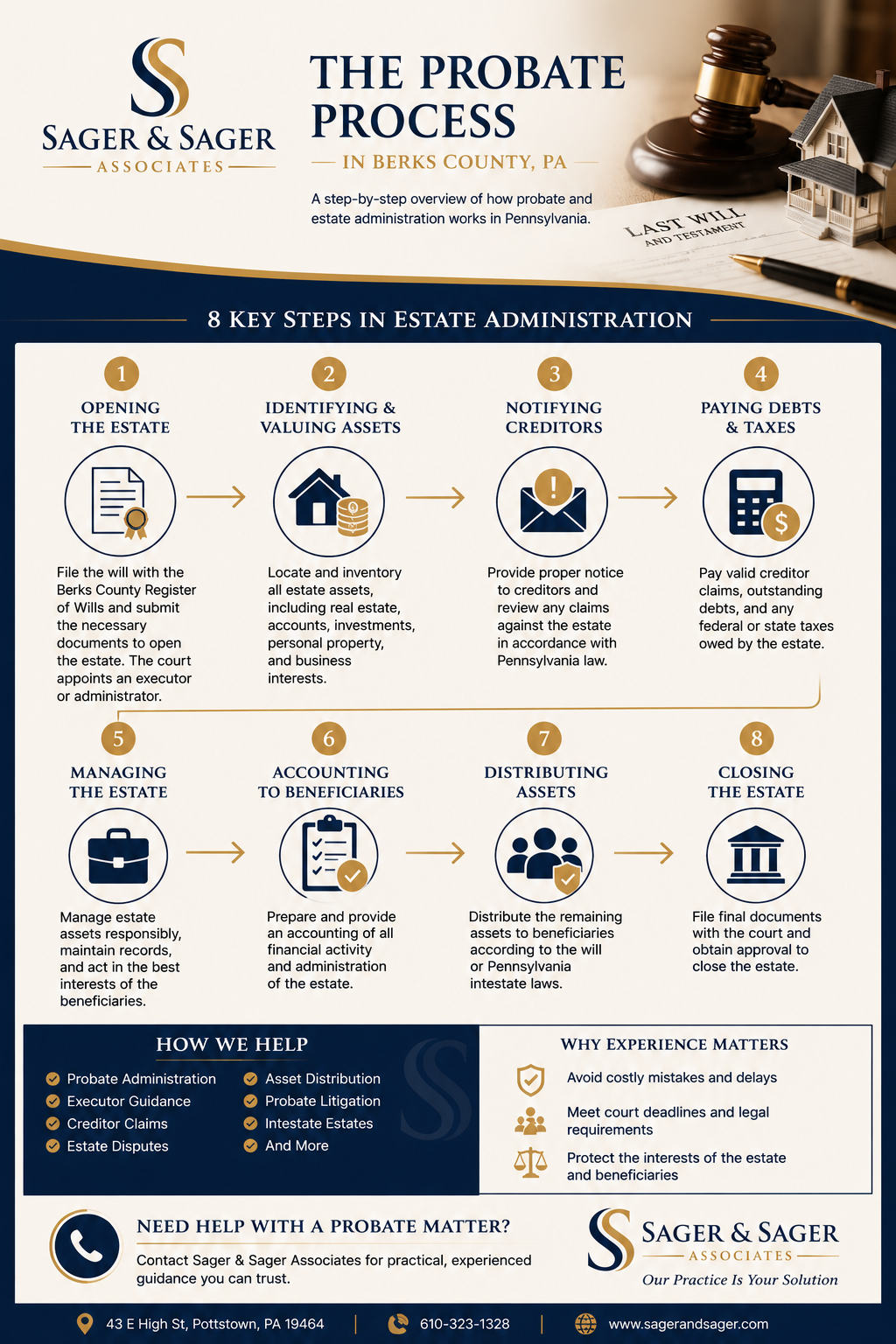
Pennsylvania Probate Overview
| Probate Topic | Purpose |
|---|---|
| Opening an Estate | Filing the will and appointing an executor |
| Executor Duties | Managing assets and paying debts |
| Intestate Estates | Handling estates without a will |
| Creditor Claims | Resolving debts and legal notices |
| Estate Distribution | Transferring assets to beneficiaries |
Understanding these requirements can help families avoid delays and disputes.
Executor Responsibilities
Serving as an executor involves major legal and financial responsibilities.
Common executor duties include:
- Filing probate documents
- Securing estate assets
- Managing bank accounts and property
- Paying debts and taxes
- Communicating with beneficiaries
- Preparing distributions
Executors also have fiduciary duties. This means they must act in the best interests of the estate and beneficiaries.
Errors can create personal liability if the estate is not handled properly.
Opening an Estate in Berks County
The probate process usually begins with filing paperwork through the Berks County Register of Wills.
This may include:
- Filing the original will
- Submitting probate petitions
- Requesting an appointment as executor
- Obtaining Letters Testamentary
- Obtaining Letters of Administration
These documents give the executor legal authority to act on behalf of the estate.
Accurate filing is important because mistakes can delay probate and create additional complications.
Identifying and Valuing Estate Assets
One of the most important parts of probate is identifying estate assets and determining their value.
Estate assets may include:
- Homes and real estate
- Bank accounts
- Retirement accounts
- Investment accounts
- Vehicles
- Personal property
- Business interests
- Life insurance proceeds
Many Berks County estates involve family-owned property and long-held assets. Proper valuation and documentation help ensure assets are distributed correctly under Pennsylvania law.
Our firm helps executors gather financial information and address issues that arise during estate administration.
Handling Debts and Creditor Claims
Pennsylvania law requires estates to address debts before distributing assets to beneficiaries.
This process may involve:
- Notifying creditors
- Reviewing claims
- Paying valid debts
- Resolving disputes
Executors must follow strict deadlines and procedures during this stage of probate.
Failing to handle debts correctly can create legal problems for both the estate and the executor personally.
Estate Distribution and Final Accounting
After debts and expenses are resolved, the remaining estate assets can be distributed.
This process may include:
- Preparing a final accounting
- Obtaining beneficiary approvals
- Transferring property titles
- Distributing financial assets
Some estates involve disputes over distributions or executor decisions.
Clear documentation and experienced legal guidance can help reduce conflicts during the final stages of probate.
What Happens If There Is No Will?
When someone dies without a valid will, Pennsylvania’s intestate succession laws determine how assets are distributed.
Under Pennsylvania law:
- The court appoints an administrator
- Assets pass according to a legal hierarchy
- Distribution follows state law instead of personal wishes
Intestate estates often create additional challenges, especially when multiple family members are involved.
Disputes may arise over:
- Who should serve as administrator
- How property should be divided
- Ownership of assets
Working with an experienced probate lawyer can help reduce confusion and protect the estate.
Probate Litigation and Estate Disputes
Some probate cases involve legal disputes between family members or beneficiaries.
Common probate disputes include:
- Will contests
- Allegations of undue influence
- Executor misconduct claims
- Beneficiary disagreements
- Asset ownership disputes
These conflicts can delay probate and increase stress for families.
At Sager & Sager, we help clients resolve probate disputes efficiently while protecting their legal and financial interests.
Common Probate Challenges
Families often encounter unexpected issues during probate.
Common challenges include:
- Missing financial records
- Difficulty locating assets
- Family disputes
- Delays in property sales
- Tax concerns
- Creditor issues
Estates involving homes, farmland, or investment assets may require additional legal and financial analysis.
Proper planning and organization can help keep probate moving forward.
Common Executor Mistakes
Executors can run into problems if they:
- Miss court deadlines
- Distribute assets too early
- Fail to notify creditors
- Mismanage estate funds
- Keep incomplete records
Working with a probate lawyer can help avoid these mistakes and protect the executor from personal liability.
How Long Does Probate Take in Pennsylvania?
The probate timeline depends on the complexity of the estate.
Factors that may affect the timeline include:
- Number of assets
- Real estate transactions
- Creditor claims
- Family disputes
- Court scheduling
Some estates are resolved within several months. Others may take a year or longer.
Our goal is to help clients complete probate as efficiently as possible while meeting all legal requirements.
Our Approach to Probate and Estate Administration
At Sager & Sager, we focus on organized and practical estate administration.
Daniel Sager works directly with clients to:
- Explain the probate process
- Identify potential issues early
- Develop an efficient strategy
- Ensure compliance with Pennsylvania law
We understand that probate often occurs during emotionally difficult times. Our approach is designed to provide clarity, reduce stress, and help families move forward.
Serving Clients Throughout Berks County
We represent clients throughout Berks County, including:
- Reading
- Wyomissing
- Exeter Township
- Muhlenberg Township
- Kutztown
- Fleetwood
- Birdsboro
- Hamburg
Whether you are serving as an executor, managing an estate, or involved in a probate dispute, we are prepared to help.
Speak With a Berks County Probate Lawyer Today
Managing an estate involves important legal and financial responsibilities. Experienced legal guidance can help make the probate process easier and help families avoid costly mistakes.
At Sager & Sager, Daniel Sager provides probate and estate administration guidance for clients throughout Berks County.
Contact our office today to speak with a Berks County probate and estate administration lawyer.
Frequently Asked Questions
Do all estates go through probate in Pennsylvania?
No. Some assets avoid probate, including jointly owned property and accounts with named beneficiaries.
What does an executor do?
An executor manages estate assets, handles court filings, pays debts, and distributes property to beneficiaries.
Can probate disputes be avoided?
Clear estate planning documents and proper administration can reduce the risk of disputes.
What happens if an executor makes a mistake?
Executors may be held legally responsible for errors or failure to fulfill their fiduciary duties.
How do I start the probate process?
Probate usually begins by filing the will and probate documents with the Register of Wills in the county where the deceased person lived.


